From Novelty to Necessity: The State of AI in Real Estate for 2026

CEO The Librarian
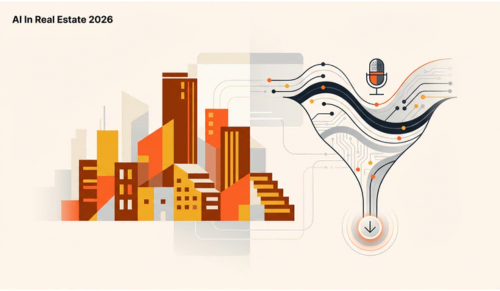
By 2026, real estate has shifted from asking what AI is to optimizing it. Three mega-trends define the landscape: AI collapses the traditional funnel into zero-click, decision-stage searches that reward precise BoFu content; agentic AI automates end-to-end tasks with voice-first inputs; and hyper-realistic AI media tools deliver professional video from static assets. AI replaces support tasks, not agents, amplifying those who adopt it to handle more deals while focusing on human strengths like negotiation and relationships.
The conversation around Artificial Intelligence in real estate has shifted. In 2024 and 2025, the industry asked, "What is this?" By 2026, the question has become, "How do I optimize this?"
According to the 2025 REALTORS® Technology Survey, while 59% of REALTORS® are using emerging technologies, a significant gap remains: 32% still have not actively tried AI for their business, while the top 20% are using it daily,.
Here are the three "mega-trends" and operational shifts defining the real estate landscape right now, based on industry insights and data.
1. The Death of the Traditional Funnel
One of the most profound shifts is how AI is changing consumer search behavior. We are moving from a "manufacturing leads" model to an "AI-driven search" model.
- Collapsing the Funnel: Traditional marketing nurtures leads from "awareness" (top of funnel) to "decision" (bottom of funnel). Today, consumers are bypassing general searches and asking AI specifically for what they want (e.g., specific criteria, neighborhoods, and constraints),.
- The "Zero-Click" Economy: Search engines and AI overviews now provide answers without users ever clicking a link. This means agents must pivot their content strategy. Instead of generic blogs, agents must answer "Bottom of Funnel" (BoFu) questions—the specific, high-intent questions that stand between a consumer and a decision,.
- The Strategy: Agents who create content answering these specific questions increase their likelihood of being cited by AI search tools, capturing the highest-intent leads.
2. "Agentic" AI and the End of Manual Workflows
We are graduating from "Chatbots" (talking to AI) to "Agentic AI" (AI that performs tasks).
- Beyond the Chat Box: "Agentic AI" doesn't just write an email; it logs into your CRM, drafts the email, sends it, and sets a follow-up reminder,.
- Voice-First Productivity: Tools like Voiset are replacing the need to type notes after a showing. An agent can simply speak, "Clients liked the layout but hated the kitchen; remind me to call the owner tomorrow," and the AI automatically creates the task, schedules the follow-up, and logs the feedback,.
- Transaction Management: Platforms like Nekst allow agents to upload a contract and, within 90 seconds, extract all dates and deadlines into an organized workflow, reducing the administrative burden that leads to burnout.
3. Hyper-Realistic Video and Creative Control
The "uncanny valley" of AI video is disappearing. Tools are now capable of producing professional-grade visual assets that rival human production.
- Prompt Adherence: New models, such as Google's "Nano Banana" (Gemini), can now generate images with perfect text (like handwriting on a coffee cup) and adhere strictly to prompts without hallucinating unwanted details,.
- Static to Cinematic: Agents can now take static listing photos and use tools like 11Labs to animate them into walkthrough videos, creating immersive tours without a videographer,.
- Eye Contact Correction: Tools like Captions.ai allow agents to read a script while filming; the AI adjusts their eyes in post-production to maintain contact with the camera, making the agent look professional and confident.
The Human Element: Will Agents Be Replaced?
Despite the rapid advancement of technology, the consensus among industry leaders is that AI will replace tasks, not agents—specifically, the administrative "support layer" of the business.
- The Efficiency Boom: Experts predict that agents who embrace these tools will significantly increase their volume, potentially doing 30 deals a year with the same effort it previously took to do 10.
- The Human Premium: As routine inquiries are handled by bots (customer service, scheduling, basic data retrieval), the value of the human agent shifts to complex emotional management and negotiation. As Radius Agent CEO Biju Ashan notes, while support roles may diminish, the need for a human to navigate the "weirdness" of unique real estate deals remains irreplaceable,.
Conclusion
The data is clear: 66% of REALTORS® embrace new technology primarily to save time, and 64% do so to enhance the client experience. The agents who win in the coming years will be those who use AI to automate the "busy work" (scheduling, data entry, basic follow-up) so they can spend more time on the "human work"—building relationships and closing deals. High-impact workflows in 2026:
- CRM updates from voice notes and call transcripts.
- Follow-up sequences triggered the moment a showing ends.
- Transaction checklists with automatic reminders for inspections, signatures, and funding steps.
- Instant briefs pulled from current listings and recent comps before client calls.
Why voice-first matters:
Real estate happens in the car, between meetings, or on-site. Voice-first AI turns those moments into productive time and prevents the end-of-day admin pileup.
3. Hyper-realistic AI media becomes standard
AI video, staging, and visual enhancement tools can now generate professional media from static photos or basic floor plans. This is no longer a novelty feature. It is expected.
What changes in practice:
- Faster listing launches with consistent quality.
- Localized videos for different buyer personas without expensive reshoots.
- Visual storytelling that keeps clients engaged even when inventory is tight.
The key is to treat AI media as a production pipeline, not a one-off tool.
AI replaces support tasks, not agents
The real unlock is scale. Agents who adopt AI handle more deals with less burnout because the assistant absorbs the support layer: documentation, scheduling, follow-ups, and content production. The agent stays focused on high-value human work: negotiation, trust, and relationship management.
A short playbook for 2026
- Convert your content to decision-ready answers, not generic education.
- Use agentic AI to automate the full transaction workflow, not just drafts.
- Build a media pipeline where AI turns static assets into professional visuals on demand.
- Track time saved per deal and reinvest it into client experience.
Closing
Real estate in 2026 rewards teams that treat AI as operational infrastructure. The opportunity is not to replace the agent, but to amplify the agent. The best professionals will close more deals, respond faster, and build stronger relationships because the support work has been automated away.