From Assistants to Infrastructure, How AI Is Quietly Reshaping Everything

CEO The Librarian
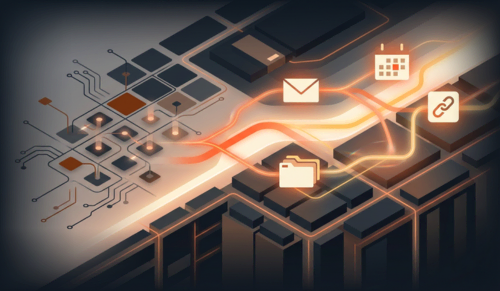
AI has shifted from experiments to dependable infrastructure across work and life. It drafts, schedules, retrieves knowledge, and powers decisions, reducing friction and enabling new products. Industries from healthcare to finance benefit through faster, safer workflows. Success pairs trust, governance, and human judgment. The Librarian acts as an always-on operations layer connecting email, calendar, files, and CRM.
Artificial intelligence has moved from experiments in labs to the fabric of daily life. It now powers search, drafts emails, schedules meetings, predicts supply chain risks, and even helps diagnose disease. What changed is not just model accuracy. AI has become dependable layer across work and life, enabling faster decisions, fewer manual steps, and new products that were not feasible before. The Librarian acts as this always-on layer, sitting across email, calendar, files, and CRM to handle routine work.
Workflows Without Friction
- Email and scheduling: AI drafts, summarizes, prioritizes, and books time, reducing inbox and calendar overhead by hours each week. Say “Block 3 to 4 pm and add prep notes,” and The Librarian creates the event with a Zoom link, then surfaces a premeeting brief.
- Documentation: Automatic meeting notes, action items, and follow-ups keep teams aligned without human transcription or scribing. The Librarian’s premeeting briefs and post-call recaps keep context tight and next steps clear.
- Customer operations: AI resolves repetitive tickets, suggests next-best actions, and escalates edge cases to human experts. The Librarian routes routine replies and nudges stakeholders, leaving you the exceptions.
Result: Fewer context switches, increased productivity, faster response time, clearer next steps, and more time for creative or relationship-driven work.
Decisions With Context
- Knowledge retrieval: AI agents pull answers from scattered docs, wikis, and CRMs, returning sources and summaries in seconds. The Librarian searches Gmail, Calendar, Drive, Notion, and CRMs, then cites the original sources.
- Forecasting and planning: The Librarian runs simple scenarios off your pipeline and staffing data, then surfaces the trade-off clearly. Example decision: “If we hire one additional service rep next month at 4,200 USD per month, average claim turnaround drops from 5.2 to 3.1 days, which historically lifts renewal rate by 2.3 percent and adds an estimated 18,000 USD in annual premium retention. Approve the hire or defer to Q2?”
- Personalization: Recommendations adapt to individual behavior, increasing relevance in marketing, education, and health. The Librarian adapts to your cadence, highlighting what matters for you, not a generic template.
Result: Better decisions, made faster, with traceable inputs and rationale.
New Products and Business Models
- Generative design: Rapid creation of prototypes, ads, UI mocks, and code accelerates iteration cycles.
- Synthetic data and testing: Simulated edge cases improve resilience in finance, autonomous systems, and cybersecurity.
- Autonomy in the loop: AI handles long-tail automation, while humans handle exceptions. The Librarian quietly tags, files, schedules, and follows up, then loops you in only when judgment is needed.
Result: Lower cost to experiment, faster time to market, and services tailored at the individual level.
Industry Transformations
- Healthcare: AI triage, imaging analysis, and drug discovery accelerate diagnosis and shorten R&D timelines.
- Finance: Real-time fraud detection, automated compliance checks, and personalized financial advice at scale.
- Education: Adaptive learning paths, instant feedback, and multilingual tutoring expand access and outcomes.
- Manufacturing and logistics: Predictive maintenance, quality control, and demand forecasting reduce downtime and waste.
- Government and public services: Document processing, benefits eligibility triage, and language translation improve service delivery.
- In real estate, The Librarian connects Pixxi (CRM) inventory with Bayut (Dubai’s property portal) market data, schedules viewings, and compiles client-ready summaries in minutes.
Result: Higher throughput, higher quality, and broader access across critical sectors.
Trust, Safety, and Governance
- Data governance: Granular access controls, encryption in transit and at rest, and audit logs are becoming standard. The Librarian emphasizes access controls and audit logging, so actions have a record.
- Model oversight: Evaluation frameworks, red-teaming, and bias testing reduce harm and improve reliability.
- Human-in-the-loop: Clear handoffs for high-stakes decisions preserve accountability and recourse. Sends and calendar edits are proposed for your approval, so you stay in control.
- Regulation and standards: Emerging policies aim to align innovation with safety, transparency, and privacy.
Result: A maturing ecosystem where accountability, monitoring, and secure design are first-class requirements.
The Rise of AI Agents
- From tools to collaborators: Agents can understand goals, use software, take actions, and report back with evidence. The Librarian is an agent that books meetings, drafts replies, searches docs, and shows what changed.
- Orchestration: Agents coordinate with calendars, CRMs, email, and docs to complete multi-step tasks end to end. “Email Sam a recap, attach the deck, and move the call to Friday” happens as one flow.
- Domain expertise: Vertical agents specialize in real estate, healthcare, legal ops, or customer support, improving outcomes with context. The Librarian’s real estate workflows include pulling Pixxi details, images, and floor plans on command.
Result: Work shifts from micromanaging tasks to defining outcomes and reviewing results.
Skills for the AI Era
- Prompting to specifying: Clear objectives, constraints, and examples produce better outputs than vague requests. The Librarian thrives on plain-English requests, like “Hold 30 mins with Tiago next Tuesday afternoon, Zoom, agenda: Q1 priorities.”
- System thinking: Understanding data flows, permissions, and failure modes helps teams design reliable automations.
- Judgment and relationships: Human strengths in ethics, negotiation, creativity, and leadership become even more valuable.
Result: Augmentation, not replacement, with humans moving up the value chain.
What This Means for Organizations
- Lead with benefit: To see fast ROI, start with high-friction processes like email triage, weekly reports, data entry, and follow-ups yield quick wins. Deploy The Librarian first for inbox triage, scheduling, and follow-ups to show immediate time savings.
- Measure impact: Track time saved, resolution rates, and quality metrics to guide deployment and investment. (Callout: Use premeeting briefs and follow-up logs as measurable artifacts.)
- Invest in foundations: Clean data, secure access, and integration layers compound value across use cases. (Callout: Connect Gmail, Calendar, Drive, Notion, and Pixxi to unlock cross-tool workflows.)
- Iterate safely: Pilot with a human-in-the-loop, then graduate to higher autonomy where evidence supports it.
Result: Compounded productivity, happier teams, and better customer experiences.
Conclusion
AI is no longer a gadget. It is infrastructure. The most successful teams will pair trustworthy systems with human judgment, focus on outcomes over outputs, and design for privacy and reliability from day one. This quiet revolution is not about replacing people, it is about removing friction so teams can focus on the work only humans can do. The Librarian is built for that future, acting as your practical AI operations layer that keeps work moving with less effort.gment human capabilities, enhance decision-making, and unlock new possibilities for productivity and creativity.
AI is no longer a futuristic concept—it's a present-day reality that's reshaping how businesses operate and how professionals approach their daily work. From small startups to large enterprises, organizations are discovering that AI isn't just about efficiency; it's about reimagining what's possible.
Key Ways AI is Transforming Work
1. Intelligent Automation
AI-powered automation goes beyond simple task repetition. Modern AI systems can understand context, make decisions, and adapt to changing circumstances. This means professionals can offload not just repetitive tasks, but complex workflows that require judgment and contextual awareness.
- Smart Scheduling: AI assistants that understand priorities and preferences
- Document Processing: Intelligent extraction and analysis of information
- Communication Management: Automated responses that maintain personal touch
2. Enhanced Collaboration
AI is breaking down barriers to effective collaboration. Language translation happens in real-time, meeting summaries are generated automatically, and team insights help optimize group dynamics and productivity.
- Real-time Translation: Breaking language barriers in global teams
- Meeting Intelligence: Automated notes, action items, and follow-ups
- Knowledge Sharing: AI that surfaces relevant information when needed
3. Decision Support
Data-driven decision-making has reached new heights with AI. Systems can analyze vast amounts of information, identify patterns, and provide actionable insights that would be impossible for humans to derive manually.
- Predictive Analytics: Forecasting trends and outcomes
- Risk Assessment: Identifying potential issues before they arise
- Strategic Planning: Data-backed recommendations for growth
4. Personalized Experiences
AI enables hyper-personalization at scale, whether it's customizing customer experiences, tailoring learning paths for employees, or adapting tools to individual work styles.
- Custom Workflows: AI that adapts to how you work
- Personalized Learning: Training that evolves with your progress
- Adaptive Interfaces: Tools that configure themselves to your preferences
The Human Element
Despite all the technological advancement, the most successful AI implementations are those that enhance rather than replace human capabilities. AI handles the routine, the analytical, and the repetitive—freeing humans to focus on creativity, empathy, and strategic thinking.
The future of work isn't about humans versus machines; it's about humans and machines working together, each contributing their unique strengths to achieve outcomes neither could accomplish alone.
Looking Ahead
As AI continues to evolve, we can expect even more profound changes in how we work. The organizations and professionals who embrace these tools thoughtfully—using AI to amplify human potential rather than simply cut costs—will be the ones who thrive in this new era.
The question is no longer whether AI will reshape work, but how we'll adapt to make the most of this transformation. The tools are here. The opportunity is now. The future of work is being written today.
Ready to experience how AI can transform your workday? Start with The Librarian and discover the power of an AI assistant that works the way you do.